
Are Graphic Resumes ATS Compatible? What Every Executive Should Know Before Submitting One
Jan 07, 2026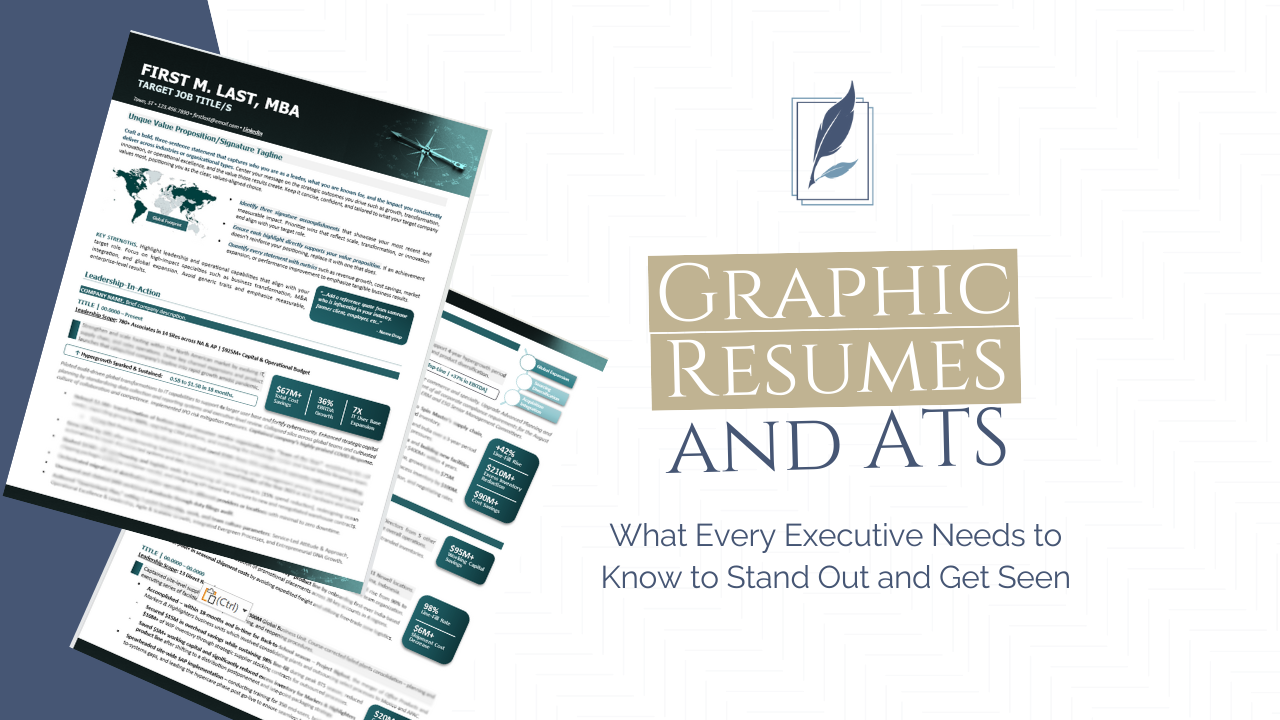
Graphic resumes are having a moment. From bold visuals and infographics to color-coded highlights, they’re designed to stand out. But here’s the real question: do they actually help you, or hurt you, in your job search?
Let’s dig into what works, what doesn’t, and how to strike the perfect balance between eye-catching design and Applicant Tracking System (ATS) compatibility.
Why Graphic Resumes Appeal to High Achievers
If you’re an executive or senior professional, chances are your resume tells a long, complex story. You’ve led teams, driven revenue, and built strategies that move the needle. A graphic resume lets you:
- Showcase achievements visually (think charts, sidebars, or data highlights).
- Guide the reader’s eye toward key metrics and leadership outcomes.
- Reinforce your brand through intentional color, layout, and typography.
A well-designed graphic resume can say, “I’m strategic, modern, and I know how to communicate impact clearly.”
The ATS Problem (and How to Outsmart It)
Most Applicant Tracking Systems aren’t fans of design flair.
ATS software reads resumes line by line, left to right, parsing text to extract job titles, skills, and experience. Anything inside a text box, image, or shape is unreadable by the software. That’s why templates from Canva or design-heavy platforms can cause issues; at first glance, they look good to humans but are invisible to software.
Pro tip: As long as your text is layered correctly (not embedded in graphics) and your key details, titles, dates, achievements, are in a readable format, your resume will still parse just fine. See a Jolt Your Career graphic resume sample:
When Graphic Resumes Backfire
Even the most beautiful resume can fail if it overwhelms or confuses the human readers. Common mistakes include:
- Overuse of color or gradients that distract from content.
- Icons or graphics replacing essential information (like job titles).
- Layouts that feel more like a marketing flyer than a professional document.
Recruiters and executive hiring leaders spend seconds scanning your resume. If they can’t find what they need at a glance, you’ve lost your advantage.
When Graphic Resumes Work
Graphic resumes shine in specific situations, especially when presentation matters as much as the content. For instance:
- Networking or referrals: When you’re sending directly to a decision-maker.
- Consulting or portfolio-based roles: Where design reinforces your personal brand.
- Executive submissions via email or ATS: Where you upload as a PDF to ensure the document can be read across all devices.
In these cases, graphics help you own the narrative and make your results memorable.
The Smart Executive Strategy
At your level, you already know that hiring decisions aren’t made from a resume alone. The resume is simply one part of your executive career toolkit, but it’s a powerful one when used strategically.
At the executive level, qualifications alone don’t set you apart. Your peers have impressive credentials, too. What distinguishes you is how you present your story: how you lead, the outcomes you drive, and the value you bring. Design is the bridge between your message and how it’s received.
A winning graphic resume:
- Uses design elements intentionally to highlight key messages and guide attention
- Establishes visual hierarchy through balance, alignment, and clean spacing
- Showcases measurable achievements in an engaging, easy-to-scan format
- Reflects a cohesive, modern, and professional personal brand
Avoid off-the-shelf templates that flatten your individuality. Instead, invest in a design that’s built around you — your brand, your leadership philosophy, and your achievements. When design and storytelling work together, your resume becomes a strategic asset that captures attention, parses in the ATS, and positions you as the obvious choice.
Final Thoughts
Graphic resumes aren’t inherently good or bad. Like any tool, their impact depends on how they’re used.
Before you download that trending template, remember that design should complement your story, not compete with it. When executed thoughtfully, visual elements can reinforce your credibility, draw attention to the metrics that matter, and make your accomplishments impossible to overlook.
You’ve worked hard to build your career; your resume should reflect that level of excellence.
Pro Tip for Executives
If you want a resume that turns heads and performs flawlessly through ATS systems, work with a professional who understands both design and strategy. The goal isn’t to simply look impressive, but to create results that speak for themselves.
Ready to Elevate Your Executive Brand?
Your experience deserves more than a template.
Partner with Jolt Your Career to create a resume that is as strategic as the roles you pursue.
Meet The Author

